
From The Edge
November 2026Sharpen your edge every month – insights, tips and tools to help elite hockey players skate faster, smarter and stronger!
In this issue:
Coach’s Corner: Arriving with control
Performance Tip: Checking where your stop finishes
Upcoming PA Day Skates
Athletes of the Month: Guelph Minor Hockey Association
Recipe of the Month: Tomato and Ricotta Pasta Bake
At Falcon’s Edge, every stride is a step toward mastery. Let’s get after it.
From the Edge
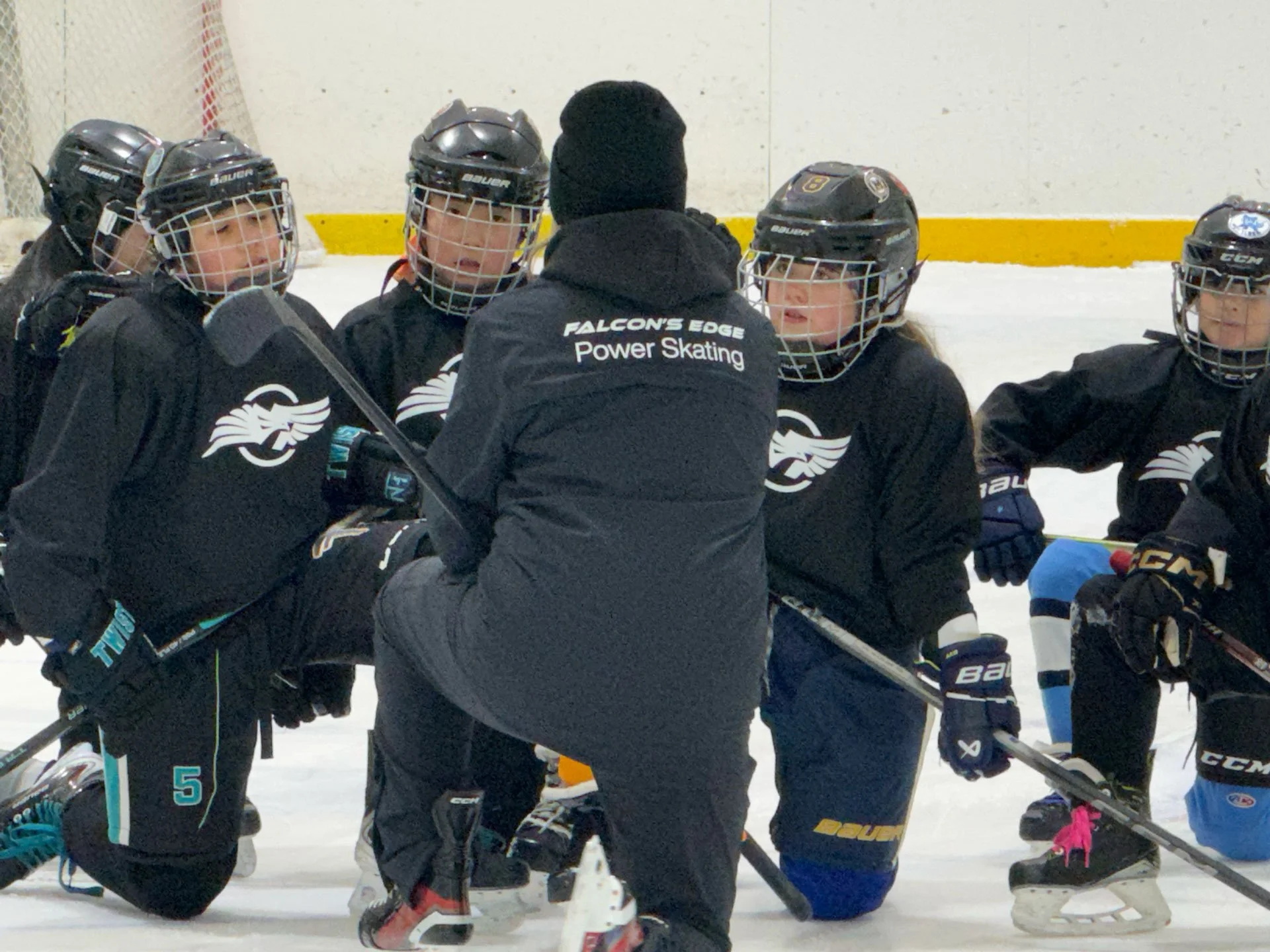
This month, we’re celebrating the Guelph Minor Hockey Association and the effort its players are bringing to their work with Coach Stephanie. Their willingness to apply corrections is showing in their edge work, balance, stability and acceleration.
We also look at a skill that deserves its own attention: stopping with control. Add two November 27 P.A. Day skates and a warm pasta dinner for busy rink nights, and there is plenty for your hockey family in this edition.
— Coach Stephanie
Coach’s Corner
Arrive with control
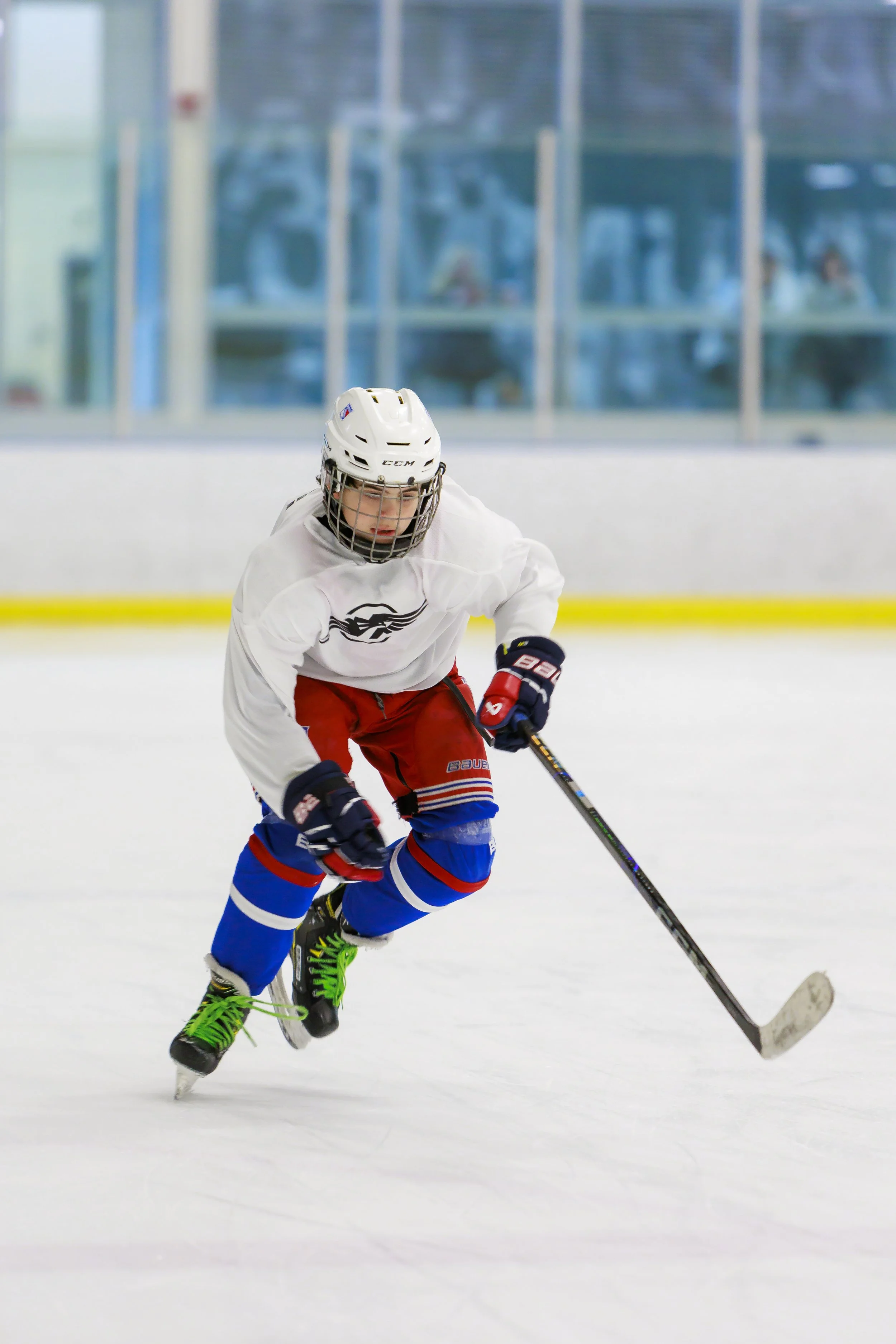
A player reaches a loose puck quickly, then slides past it. Another closes on an opponent but cannot slow down in time to stay involved. In both situations, the final metres matter as much as the approach.
Controlled stopping is a technical skill in its own right. It asks a player to manage speed, turn the skates across the direction of travel and apply edge pressure while maintaining a balanced position. The goal is to finish ready for the next action, whether that is collecting the puck, holding position or moving again.
In a two-foot hockey stop, the skates use different edges: the inside edge of one blade and the outside edge of the other. Bent knees and ankles, with the head and chest up, help establish the position for the stop. A player who finishes upright or off balance may need an extra adjustment before continuing.
For boys and girls across our rep age groups, this is worth discussing with the coach: can you stop under control in either direction, and are you ready to play the puck when you finish?
Performance Tip of the Month
Check where your stop finishes
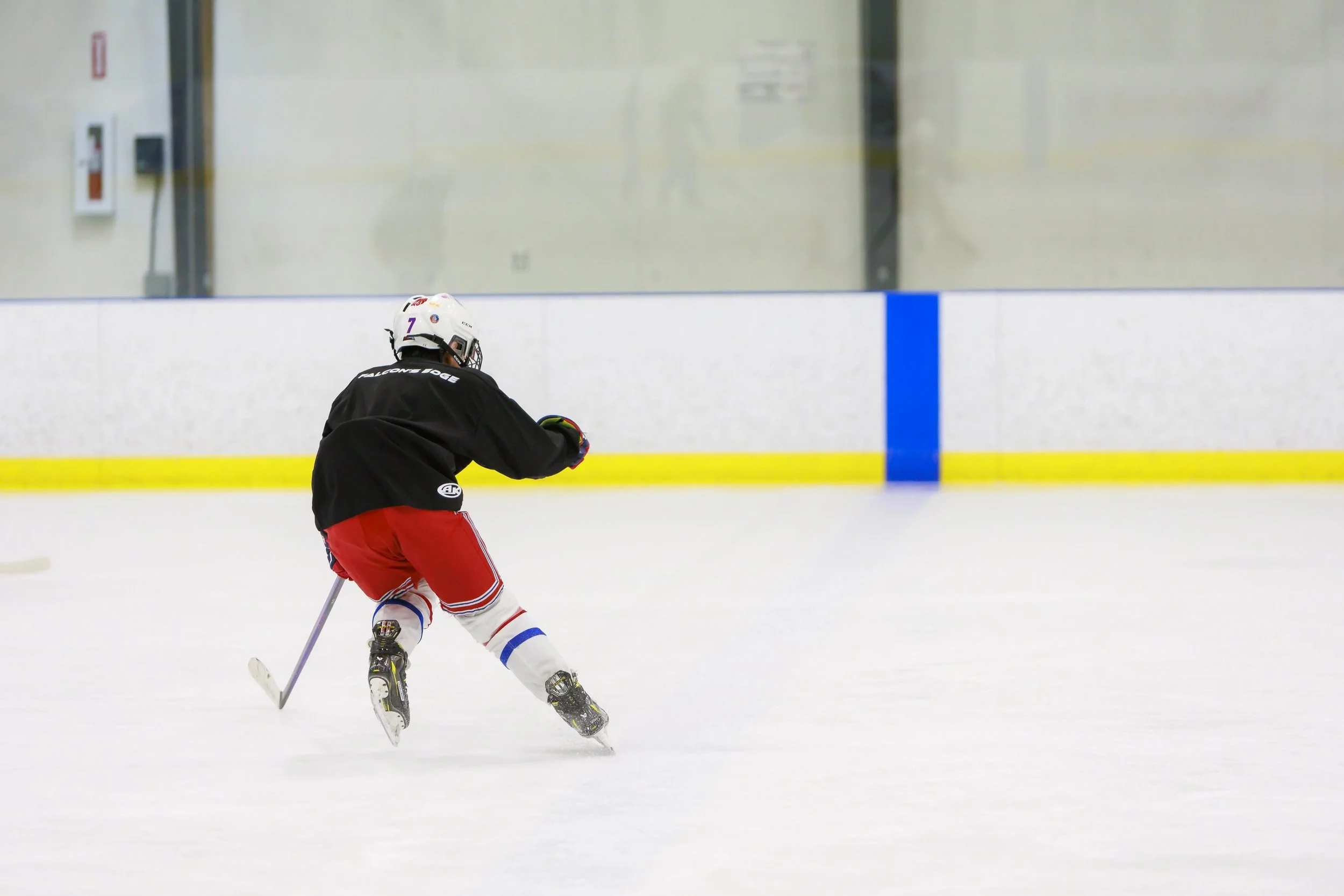
At your next coached session, ask to work on stopping inside a clearly marked area. Begin at a speed you can control, with enough space around you. After each attempt, check three things:
Did I stop in the intended area, or slide beyond it?
Did I finish balanced, with my head up?
Could I make the next play without first resetting my feet?
Compare stops facing each direction. Tell your coach which side feels less controlled, and let them guide the next adjustment. The amount of snow you spray is less useful than where and how you finish.
UPCOMING PA Day Skates
DATE: Friday, November 27, 2026
LOCATION: Oakville Hockey Academy
COST: $75 + HST per skater, per session ($84.75 total). All times are Eastern.
DETAILS: Each session includes 50 minutes of instruction.
Session 1: 11 AM HER Edges
11:00–11:50 AM ET | Girls only | U9–U12
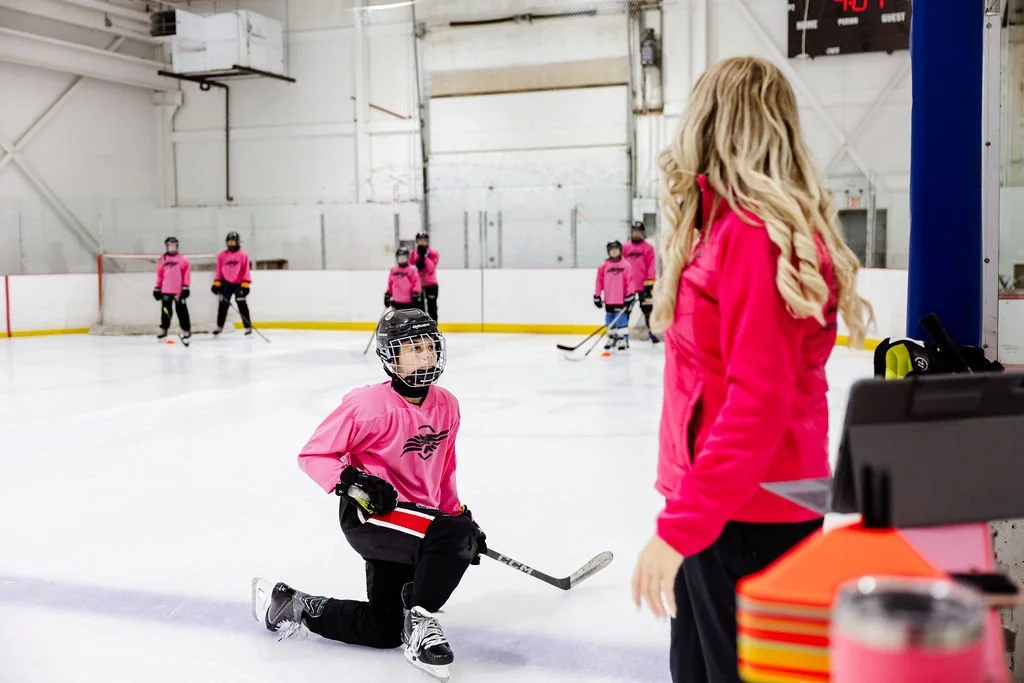
A girls-only skating lab focused on stronger edges, better balance and a more powerful stride. A dedicated opportunity for young rep players to work on the technical details behind their skating.
Session 2: 12 PM Technical Skate Lab
12:00–12:50 PM ET | Boys and girls | U10–U14
A technical session focused on acceleration, quick starts and agility. Players will work on the skating skills they use when the play changes and they need to respond.
Register by email:
Email info@falconsedge.ca with your preferred session, athlete’s first and last name, birth year and current level of play. The session age groups above apply to these P.A. Day skates.
IMPORTANT:
Your place is confirmed once full payment is received and the Falcon’s Edge waiver is completed. Payment can be sent by e-transfer to info@falconsedge.ca.
AtheleteS of the Month: Guelph Minor Hockey Association
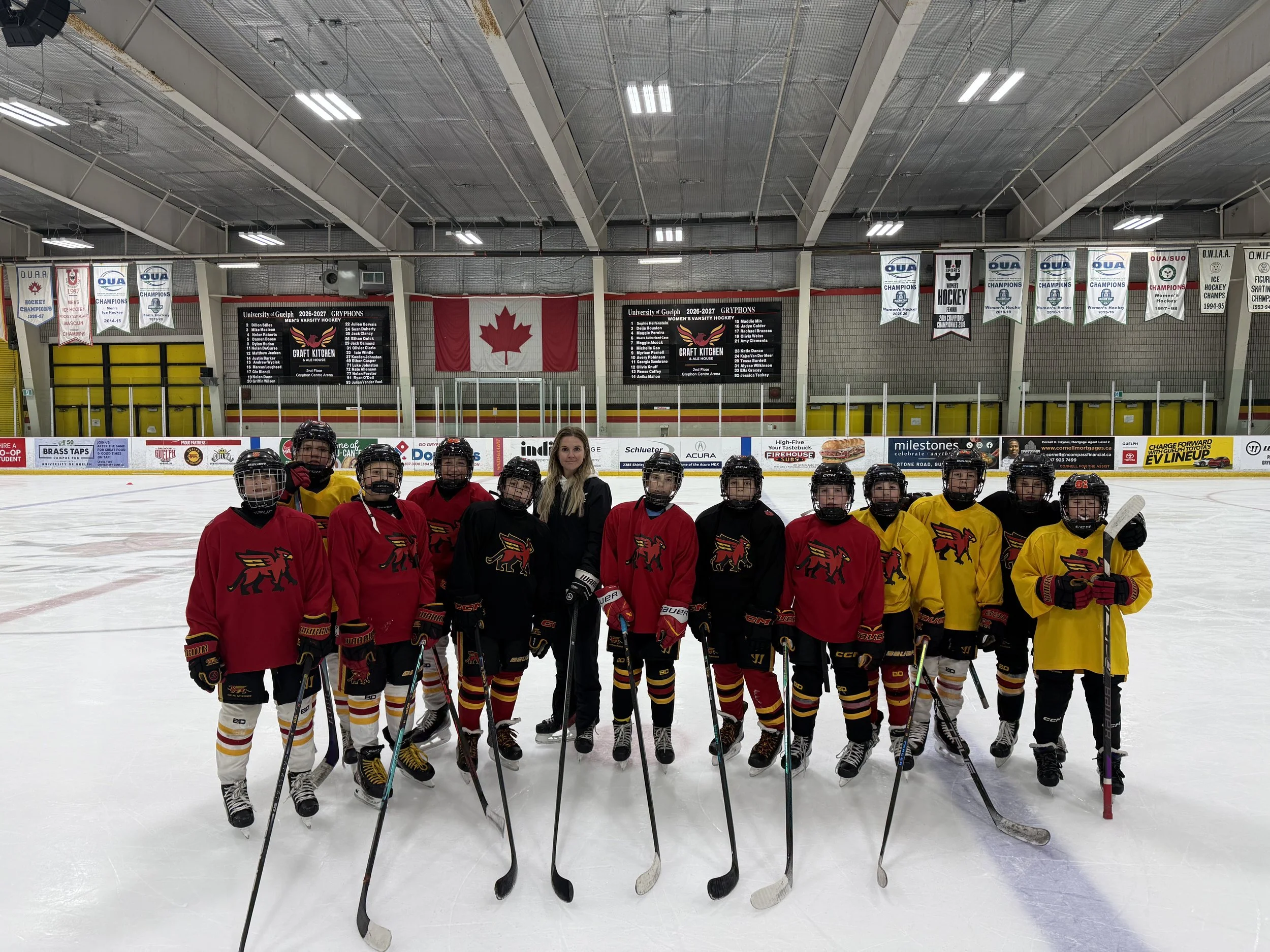
Our November Athletes of the Month recognition goes to the Guelph Minor Hockey Association as a whole. We’re celebrating an association making room for technical skating development during the season, and the players putting that opportunity to work.
During her sessions with participating GMHA teams, Coach Stephanie has been impressed by the players’ effort and willingness to apply corrections. They are taking the feedback into their next repetitions, giving unfamiliar adjustments a fair try and staying engaged in the work. That response matters: a correction becomes useful when an athlete is willing to act on it.
Stephanie is seeing progress in edge work, balance, stability and acceleration. These are meaningful areas of development for young rep players, and it is encouraging to see the athletes building their understanding alongside their execution. Each player brings a different starting point, so the value lies in their own progress and how they respond to instruction.
This recognition also extends to the association, coaches, managers and families who make these training opportunities possible. Setting aside time for focused skating instruction gives players space to learn, ask questions and work through adjustments within a busy hockey schedule.
Thank you, GMHA, for the opportunity to work with your athletes. To the players: your effort and openness to coaching have stood out.
We’re proud to recognise the association this month and look forward to continuing the work together
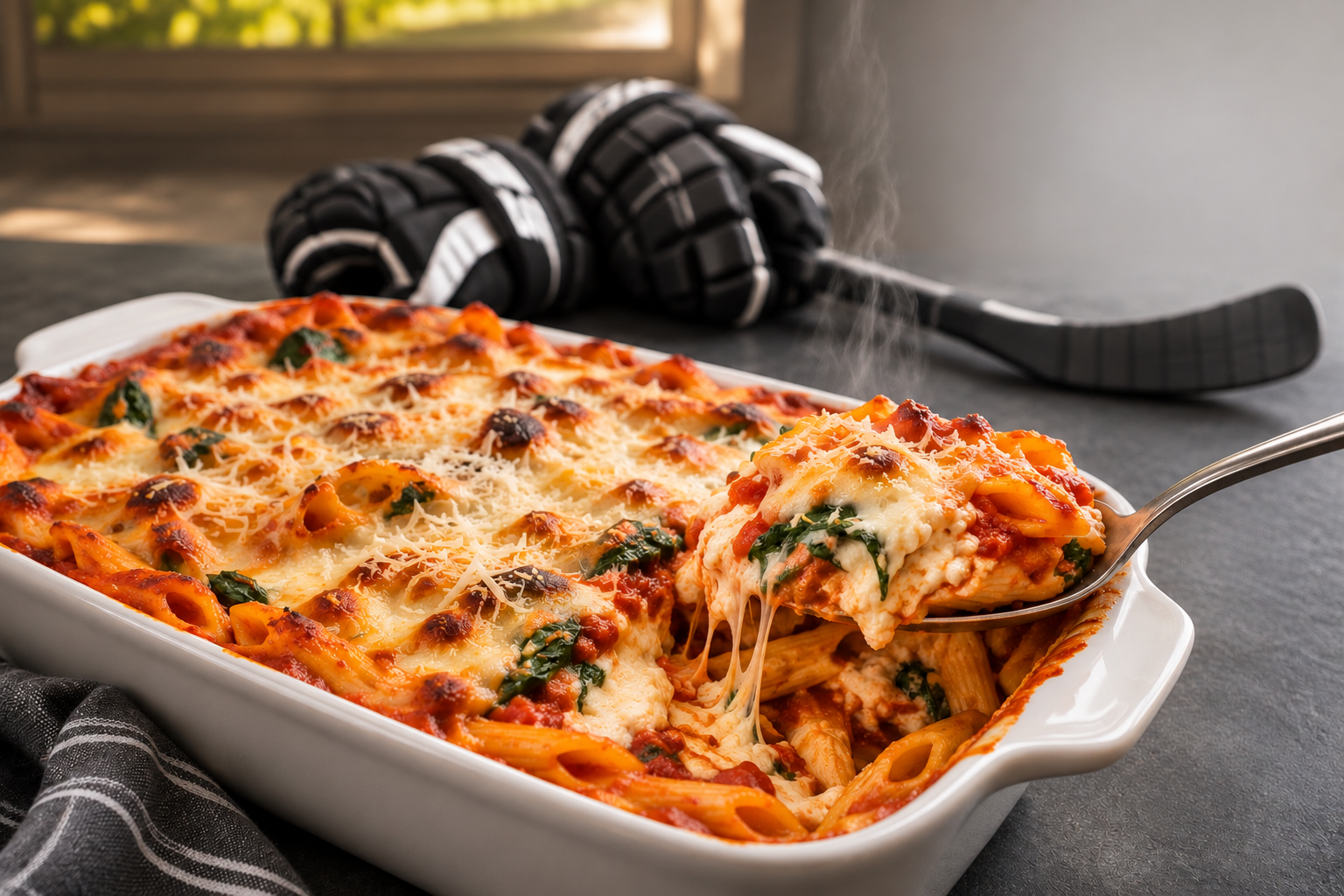
Recipe of the Month: Tomato and Ricotta Pasta Bake
A simple family dinner for a cold November evening. Serve with cucumber slices or a green salad, and portion the leftovers for another busy night.
Serves 6 | Prep 15 minutes | Bake 20–25 minutes
Ingredients:
375 g dry penne or rigatoni
1 jar (650 mL) tomato pasta sauce
1 container (475 g) ricotta cheese
2 cups (60 g) baby spinach, roughly chopped
1 tsp dried Italian seasoning
1½ cups (150 g) shredded mozzarella
¼ cup (25 g) grated Parmesan; black pepper to taste
Directions:
Heat the oven to 190°C (375°F). Lightly grease a 23 × 33 cm baking dish.
Cook the pasta for 2 minutes less than the package directions. Reserve ½ cup (125 mL) pasta water, then drain.
Mix the warm pasta with the sauce, ricotta, spinach, seasoning and pepper. Add a little reserved pasta water if the mixture is too thick.
Transfer to the dish. Top with mozzarella and Parmesan. Bake for 20–25 minutes, until hot throughout and bubbling at the edges. Rest for 5 minutes before serving.
For another night: refrigerate leftovers in shallow containers within 2 hours. Eat within 2–3 days or freeze. Reheat to 74°C. Check ingredient labels for your family’s allergy requirements.