
From The Edge
April 2026Sharpen your edge every month – insights, tips and tools to help elite hockey players skate faster, smarter and stronger!
In this issue:
Why Skating Flaws Get Exposed in Spring Hockey
What AA/AAA Coaches Are REALLY Watching at Spring Tryouts
The Recovery Power Bowl
Our Athlete of the Month: Liam, from the Vaughan Kings
At Falcon’s Edge, every stride is a step toward mastery. Let’s get after it.
Coach’s corner
Why Skating Flaws Get Exposed in Spring Hockey
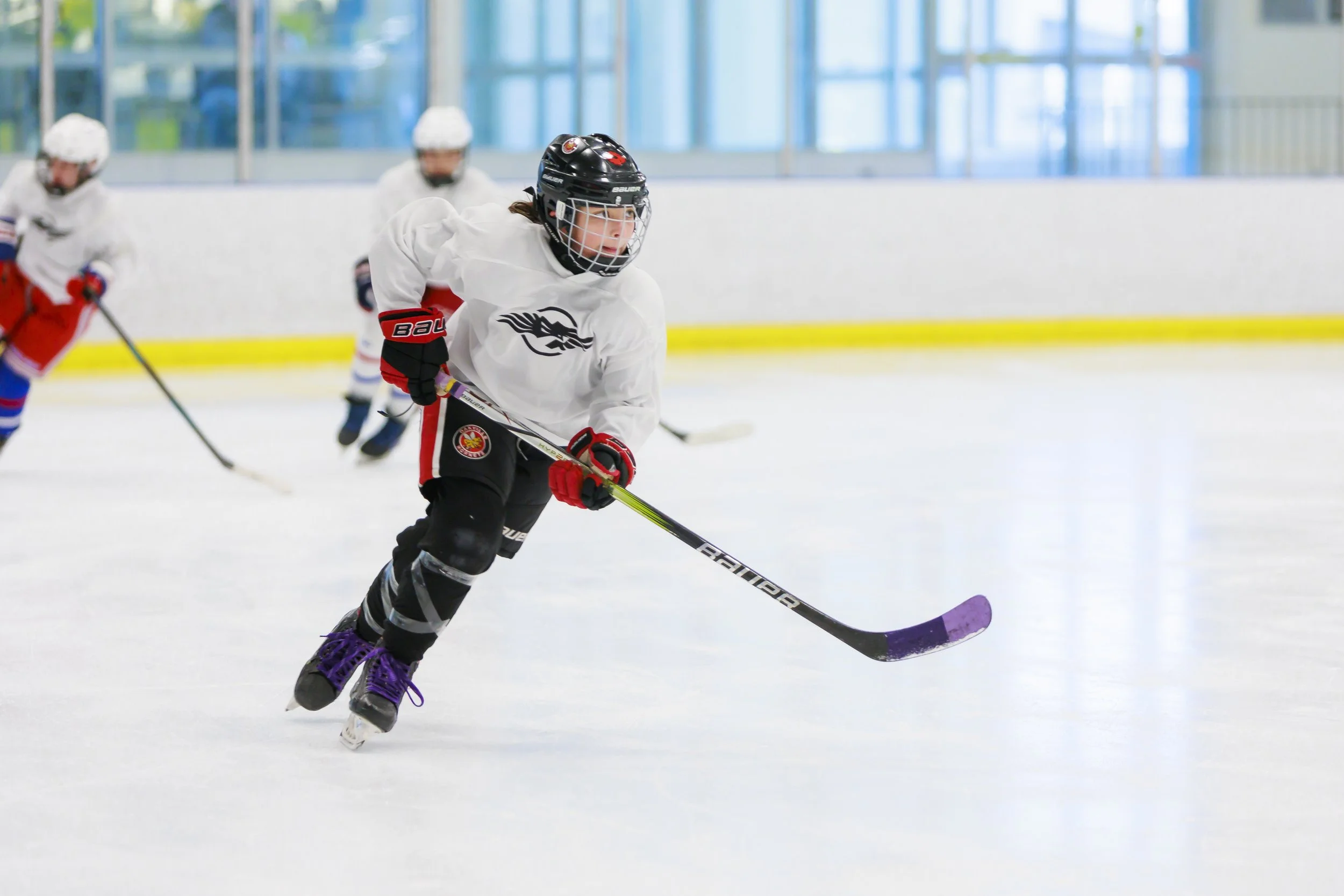
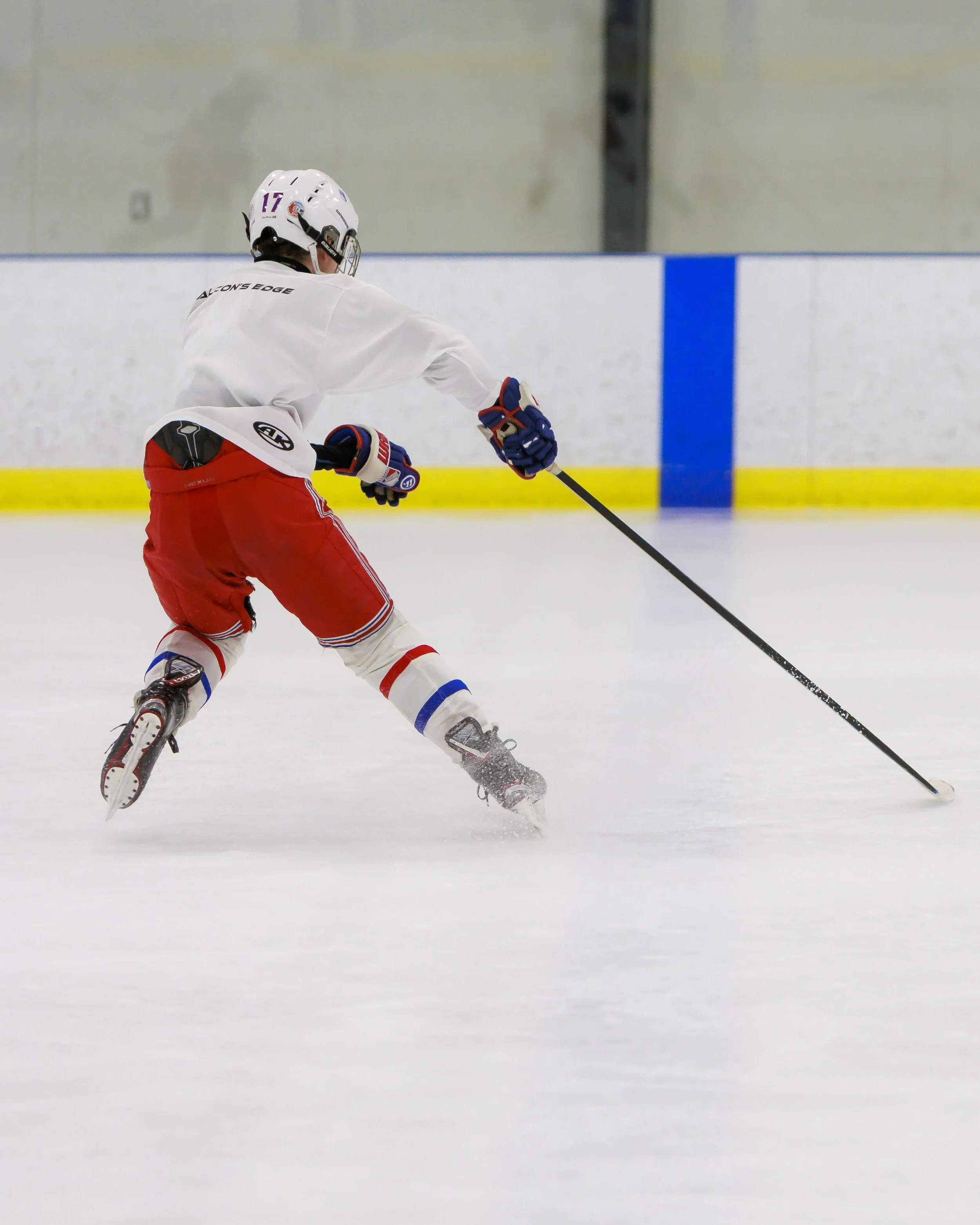
Every spring, players don’t get worse—the game gets faster. And the players who haven’t improved their skating get exposed immediately.
At spring skates and tryouts, the pace resets overnight. You’re no longer competing within a familiar system—you’re on the ice with top players from multiple teams, all pushing tempo.
That’s when inefficiencies show up.
Where Players Get Exposed
1. The Pace Jumps Immediately
Small flaws—like a weak first step or inefficient stride recovery—become obvious when the game speeds up.
2. No System to Lean On
Early in the season, structure is limited. Players can’t rely on positioning or systems—they must rely on skating.
3. Fatigue Exposes Mechanics
Inefficient skating leads to faster fatigue, which leads to:
Sloppy edges
Slower recoveries
Poor decisions under pressure
4. Coaches Evaluate Movement First
Before hands. Before shot. Before hockey IQ.
Coaches are watching how you move.
If a player struggles with:
Acceleration
Edge control
Transitions
…it limits everything else.
The Falcon’s Edge Standard
At higher levels, effort doesn’t separate players—efficiency does.
We focus on the details that directly translate to performance:
Stride efficiency and recovery
Edge engagement and control
Body positioning and balance
Because at the elite level, it’s not about working harder—it’s about moving better.
Spring Tryouts Are Here
If your athlete needs to improve acceleration, edge control, or skating efficiency before evaluations, April and May sessions are filling quickly.
Book now: info@falconsedge.ca
Follow: @falcons_edge (Instagram) | LinkedIn
Performance Tip of the Month:
What AA/AAA Coaches Are REALLY Watching at Spring Tryouts
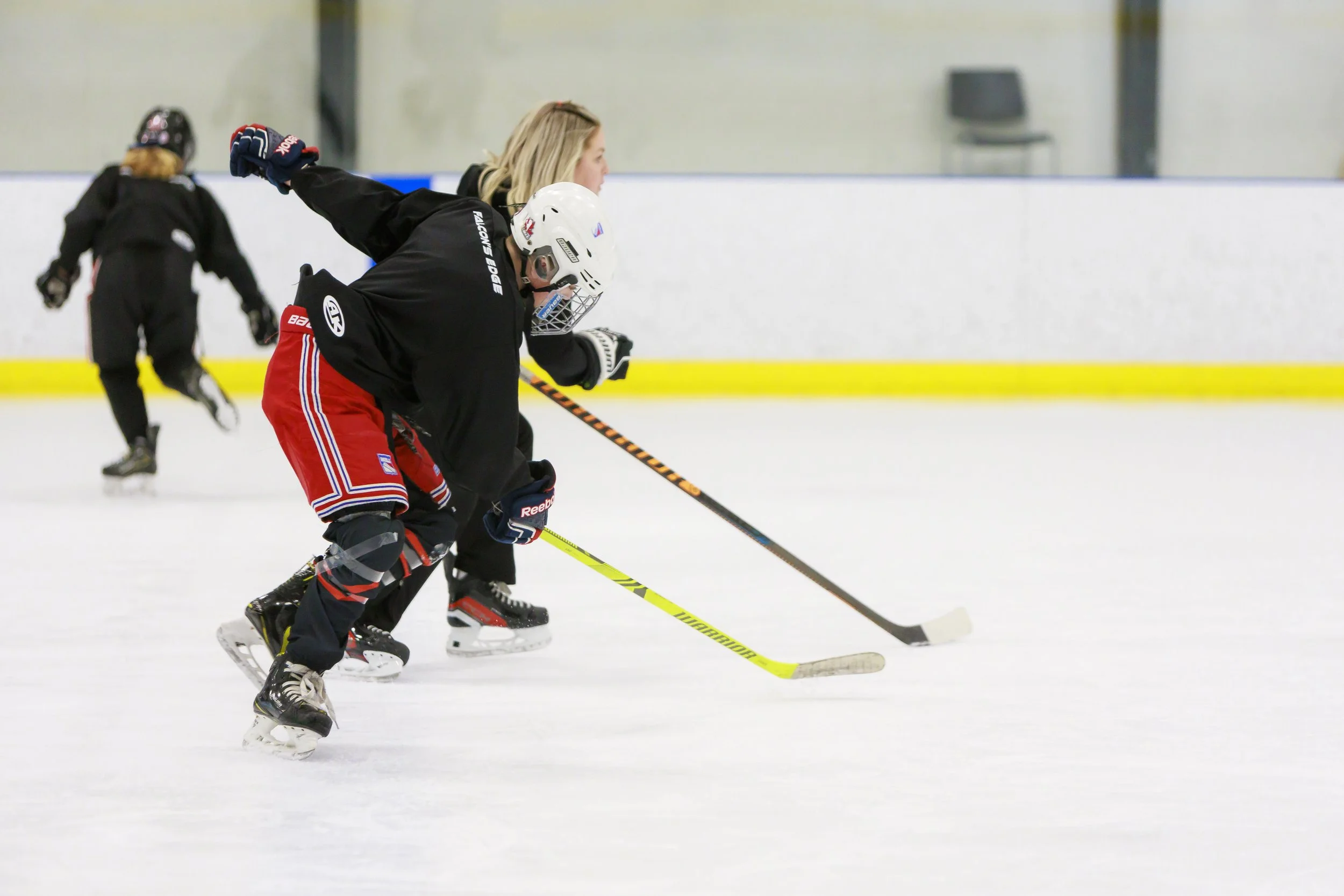
At the AA and AAA level, most players have strong hockey skills. What separates athletes is movement, habits, and consistency.
Coaches aren’t asking: “Who has the best hands?”
They’re asking: “Who can we trust in our lineup?”
5 Things Coaches Notice Immediately
1. First Three Strides = First Impression
Explosive acceleration stands out instantly. Average acceleration blends in.
2. Pace of Play (Without the Puck)
Are you stopping and starting?
Are you supporting or gliding?
Are you arriving early or late?
This is one of the biggest separators.
3. Edge Control in Traffic
Straight-line speed is common. Edge control in tight spaces is not.
4. Compete Level in Small Moments
Tryouts are won in:
Races
Battles
Second efforts
Not breakaways.
5. Body Language & Coachability
Coaches are evaluating:
Engagement
Response to feedback
Presence on the bench
They’re building a team—not just selecting talent.
From the Edge Insight
Tryouts are not about being the most talented player.
They’re about being the most reliable, efficient, and coachable player on the ice.
That’s what earns trust.
That’s what earns roster spots.
Secure your sessions before tryouts conclude: info@falconsedge.ca
Follow for weekly insights and athlete development: @falcons_edge
Recipe of the Month:
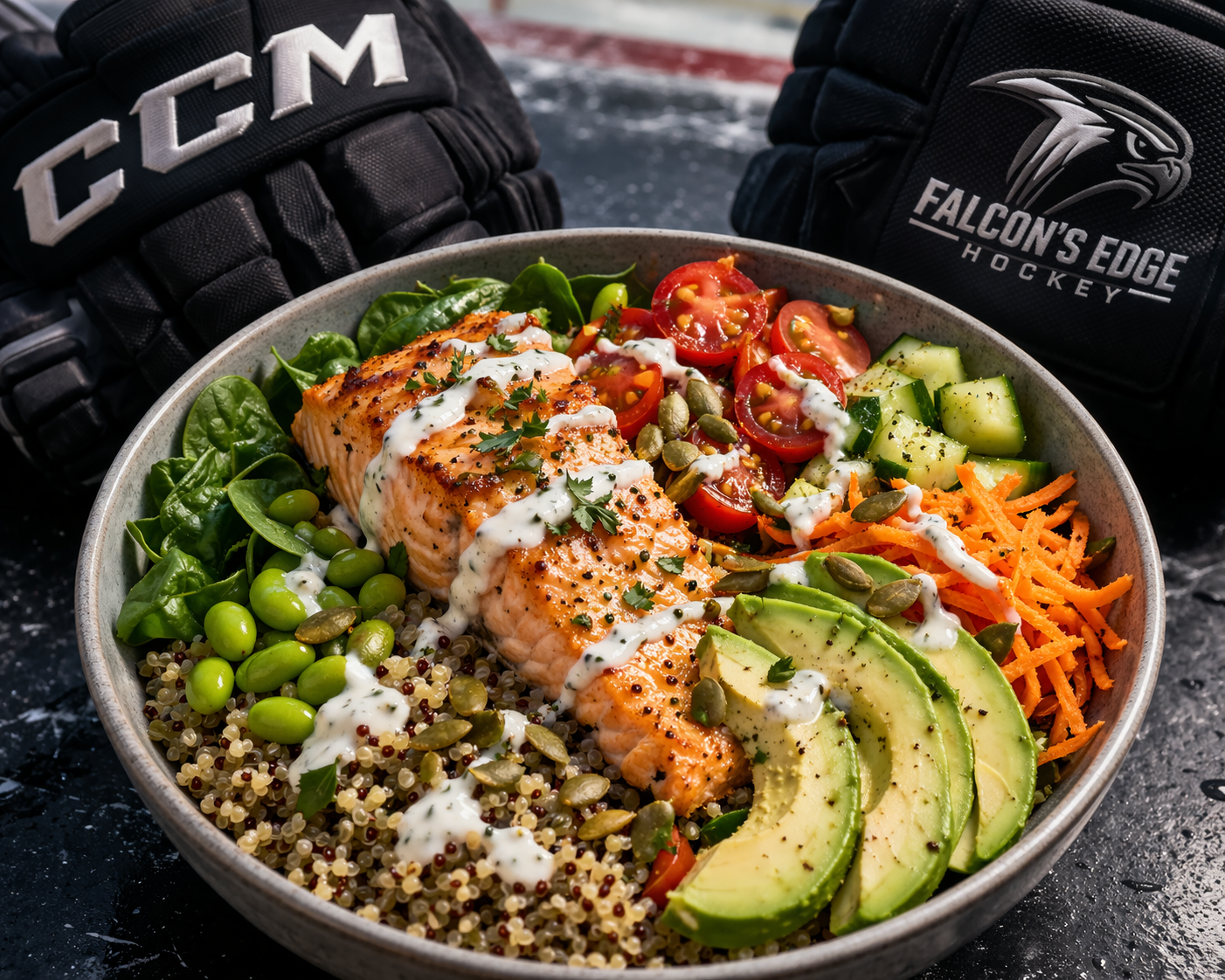
Recovery Power Bowl
Performance Focus (Kid-Friendly Translation)
Protein → “Repair your muscles”
Carbs → “Refill your energy tank”
Healthy fats → “Keep your body strong + reduce soreness”
Ingredients (Serves 2–3 players)
Base
1 cup quinoa (dry)
2 cups water or broth
Protein
2–3 salmon fillets (5 oz each)
Veg (keep it simple + familiar)
1 cup cucumber (small diced)
1 cup shredded carrots
1 cup cherry tomatoes
1 avocado (optional for picky eaters—serve on side)
2 cups spinach (can mix into quinoa to “hide it”)
Add-ons (highly recommended for athletes)
1 cup edamame
1 tbsp pumpkin seeds (optional crunch, nut-free)
Simple “Kid-Friendly” Salmon Marinade
(mild flavor—no strong “fishy” taste)
2 tbsp olive oil
1 tbsp honey
Juice of ½ lemon
Salt & pepper
Pro Tip: Let it sit 10–15 mins max (don’t over-marinate for kids)
Creamy Recovery Sauce (BIG win for kids)
½ cup Greek yogurt
1 tbsp honey
½ tsp garlic powder
Squeeze of lemon
How to Make It (Fast + Parent-Friendly)
1. Cook Quinoa
15 minutes, fluff, let cool slightly
2. Cook Salmon
Oven: 400°F for 10–12 mins
OR air fryer: 8–10 mins
3. Build the Bowl (Kid Strategy)
Instead of mixing everything:
“Build-your-own bowl” approach
Quinoa base
Salmon (chunked)
Veg separated into sections
Sauce on top or side
Portioning for Hockey Players
Lighter Appetite / Younger Players
½ cup quinoa
3–4 oz salmon
Small veg portions
High-Performance / Game Day Recovery
1–1.5 cups quinoa
Full salmon fillet
Add edamame
Extra drizzle of sauce
Timing Strategy (This matters more than the recipe)
Best window: within 30–60 minutes post-ice
Pair with:
Water + electrolytes
Fruit (banana or berries)
What This Does for Your Athletes
Faster recovery between skates
Less soreness next day
Better energy in second/third periods
Supports growth + strength development
Falcon’s Edge Coaching Insight
The biggest gap in youth hockey isn’t talent—it’s fueling consistency.
Most kids:
Under-eat after games
Eat the wrong foods (low protein, high sugar)
Delay recovery
This bowl solves all three.
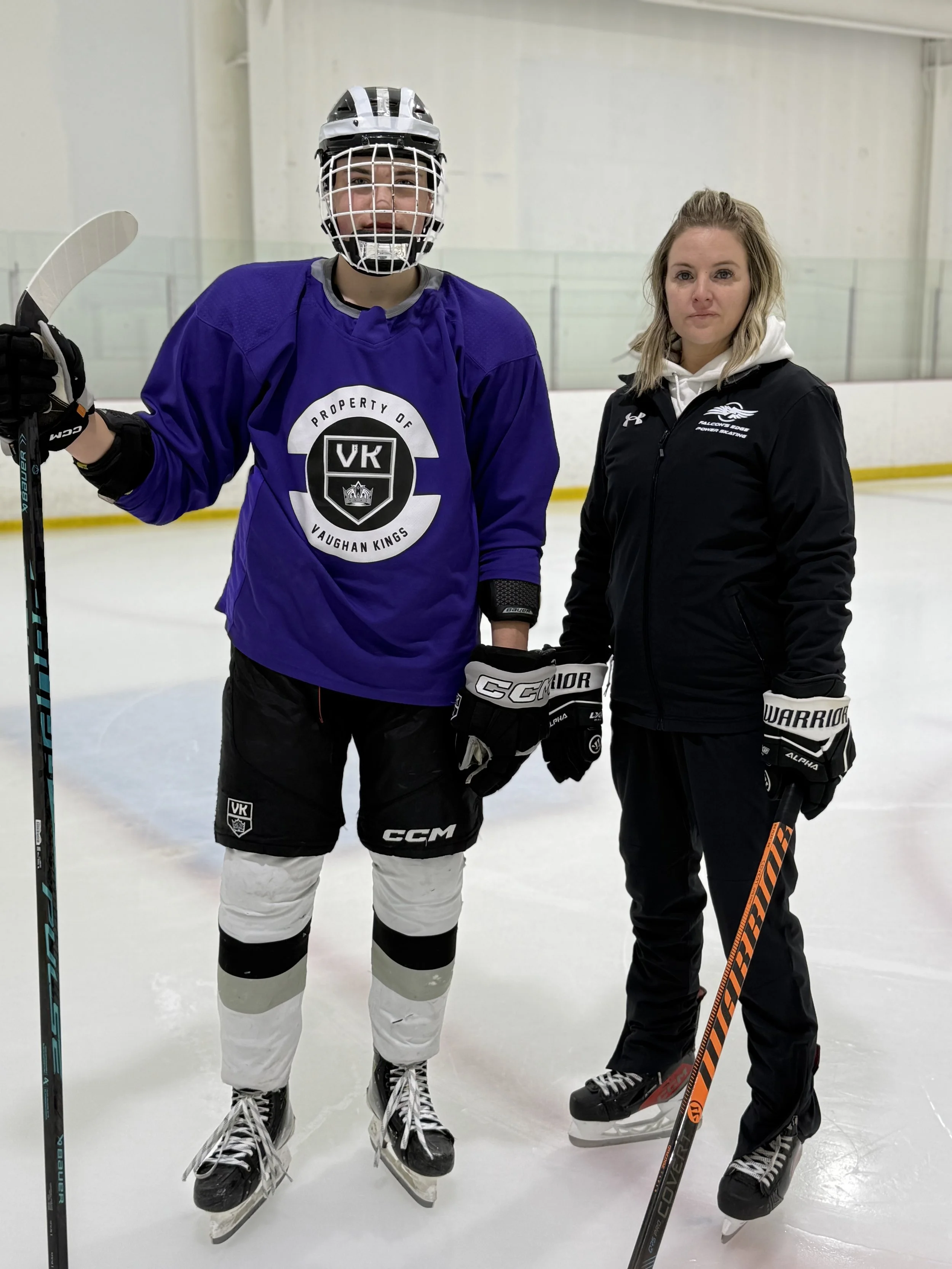
Athlete(s) of the month
Liam | U16 AAA – Vaughan Kings (GTHL)
This month, we’re highlighting an athlete doing the work required to compete at the next level.
Liam, a 6’2” defenseman with the Vaughan Kings U16 AAA program, is a high-upside player with clear Junior hockey aspirations. What separates Liam is not just his size—it’s his commitment to refining the details that matter most.
Development Focus
Over the past several months, Liam has been training weekly with Falcon’s Edge, focusing on:
Stride Efficiency & Acceleration
Improving first-step explosiveness to close gaps faster and win puck races.
Elite Edge Control & Mobility
Enhancing lateral movement and pivoting ability to defend against speed.
Balance & Stability
Building a stronger base to win battles and maintain control under pressure.
Defensive Footwork & Gap Control
Translating skating into smarter positioning and earlier defensive engagement.
Why This Matters
At the U16 AAA level, the difference between advancing to Junior hockey and getting overlooked often comes down to skating efficiency—not skill.
Players who move better:
Defend earlier
Close faster
Play with more composure
Liam’s commitment to consistent, focused development is positioning him to compete for a Junior roster spot in the 2026/27 season.
The Falcon’s Edge Difference
This is what development looks like:
Consistency
Attention to detail
A focus on movement efficiency
Combined with strong coachability and work ethic, Liam is a player to watch closely over the next year.
Want your athlete to take the next step? Contact: info@falconsedge.ca
Follow Falcon’s Edge for athlete highlights and training insights:
Instagram: @falcons_edge
LinkedIn: Falcon’s Edge Power Skating