
From The Edge
August 2026Sharpen your edge every month – insights, tips and tools to help elite hockey players skate faster, smarter and stronger!
In this issue:
Why Training Camp Is a Skating Test First
Tight Turns: The Skill That Separates Players in Small Spaces
Sunrise Power Plate: Fuel for Early Ice
Athlete of the Month: Liam McNamara, Hamilton Steel
HER Edges Girls Power Skating Camp — August 24–28
At Falcon’s Edge, every stride is a step toward mastery. Let’s get after it.
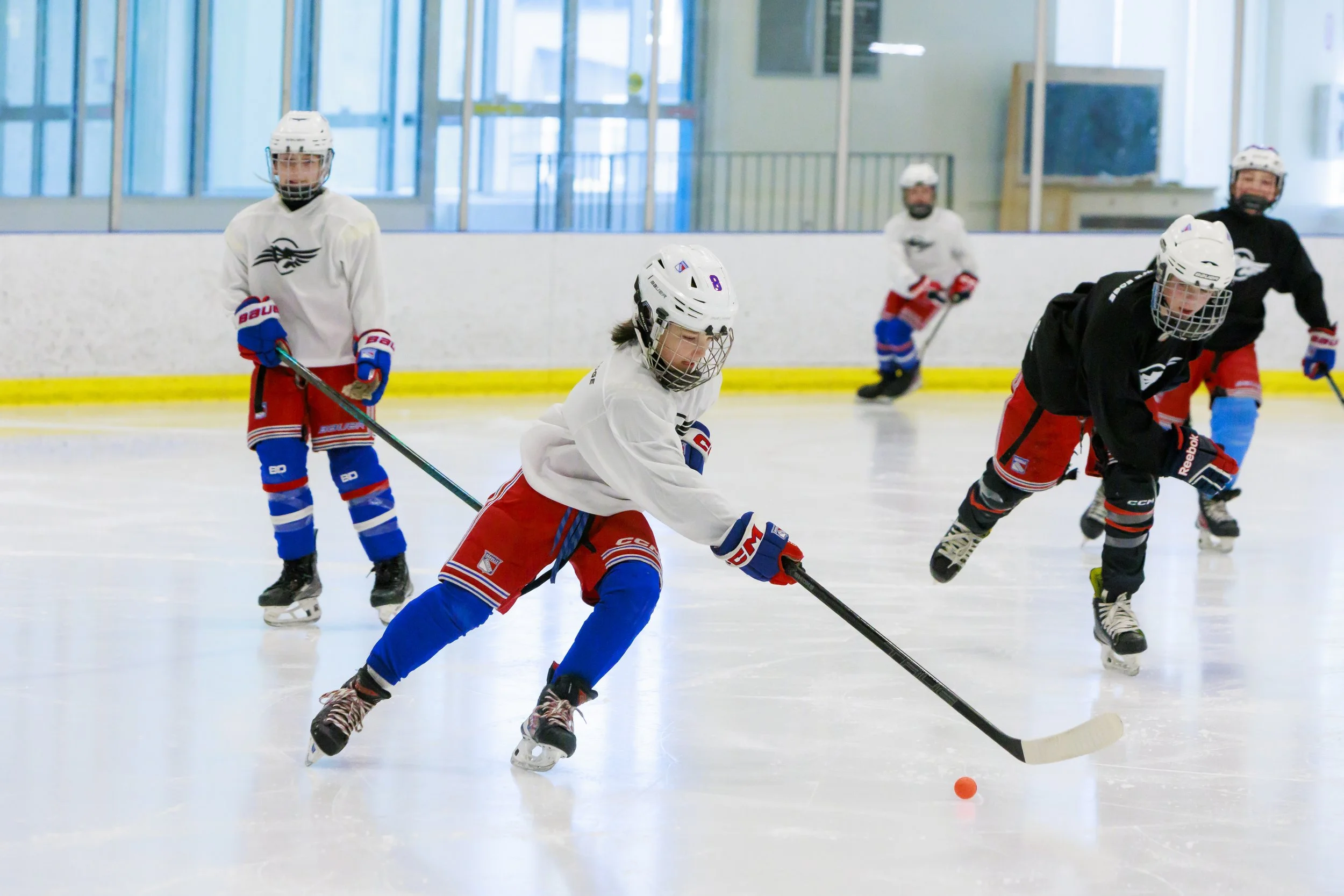
Coach’s corner
Training Camp Is a Skating Test First
Before a coach knows your name, they know how you skate. Systems, chemistry, and hockey sense all get evaluated eventually — but skating is the first thing anyone sees, and it's the first thing that separates players in a room full of unfamiliar faces.
Here's how to walk into camp with your skating already doing the talking.
Step 1: Know What Camp Actually Tests
Camp isn't a fitness test. It's a first-impressions test, and skating is the fastest way to make one. Coaches are watching how you move before they know how you think the game. If your skating isn't sharp on day one, you're spending the rest of camp trying to catch up on an impression you already made.
Step 2: Rebuild the Habits, Not Just the Conditioning
A summer off ice quietly erodes the details: knee bend gets shallow, posture creeps upright, edges get lazy. None of that shows up in a fitness test — all of it shows up the moment you're on the ice with other players around you. Before camp, spend real time resetting the fundamentals: deep knee bend, edge control, and stride mechanics. Speed and conditioning sit on top of that foundation. They don't replace it.
Step 3: Train for Repeat Effort, Not One Great Shift
Camp and exhibition games aren't one hard skate — they're shift after shift, game after game, often with limited rest in between. A player who looks great early and fades by their third shift isn't showing coaches what they need to see. Build training sessions around repeated short, intense efforts with real recovery in between, so your last shift looks like your first.
Step 4: Build the Same Habit Every Shift
Every session, every game, every scrimmage — start the same way. Same intent, same intensity, same focus from the opening seconds. Players who wait to “find their legs” during camp have already lost time they can't get back. Players who treat every shift the same way don't need to find anything — they're already there.
Step 5: Protect Your Body Before It's Asked to Perform
A rushed or skipped warm-up is one of the most common reasons players look stiff and slow early in camp. Build a real pre-ice routine — mobility, activation, a few edge-focused reps — before you ever step on the ice for a session or game. Your first shift should never be your warm-up.
Final Thought: Show Up Ready, Not Hoping to Find It
Camp moves fast, and there isn't time to slowly work your way into form. The players who stand out aren't hoping their game shows up — they've already put in the work so it's there from the opening whistle.
If you’re serious about improving your skating this offseason, we’d love to work with you. At Falcon’s Edge, our focus is simple: Build better skaters who become more impactful hockey players. Reach out today: info@falconsedge.ca
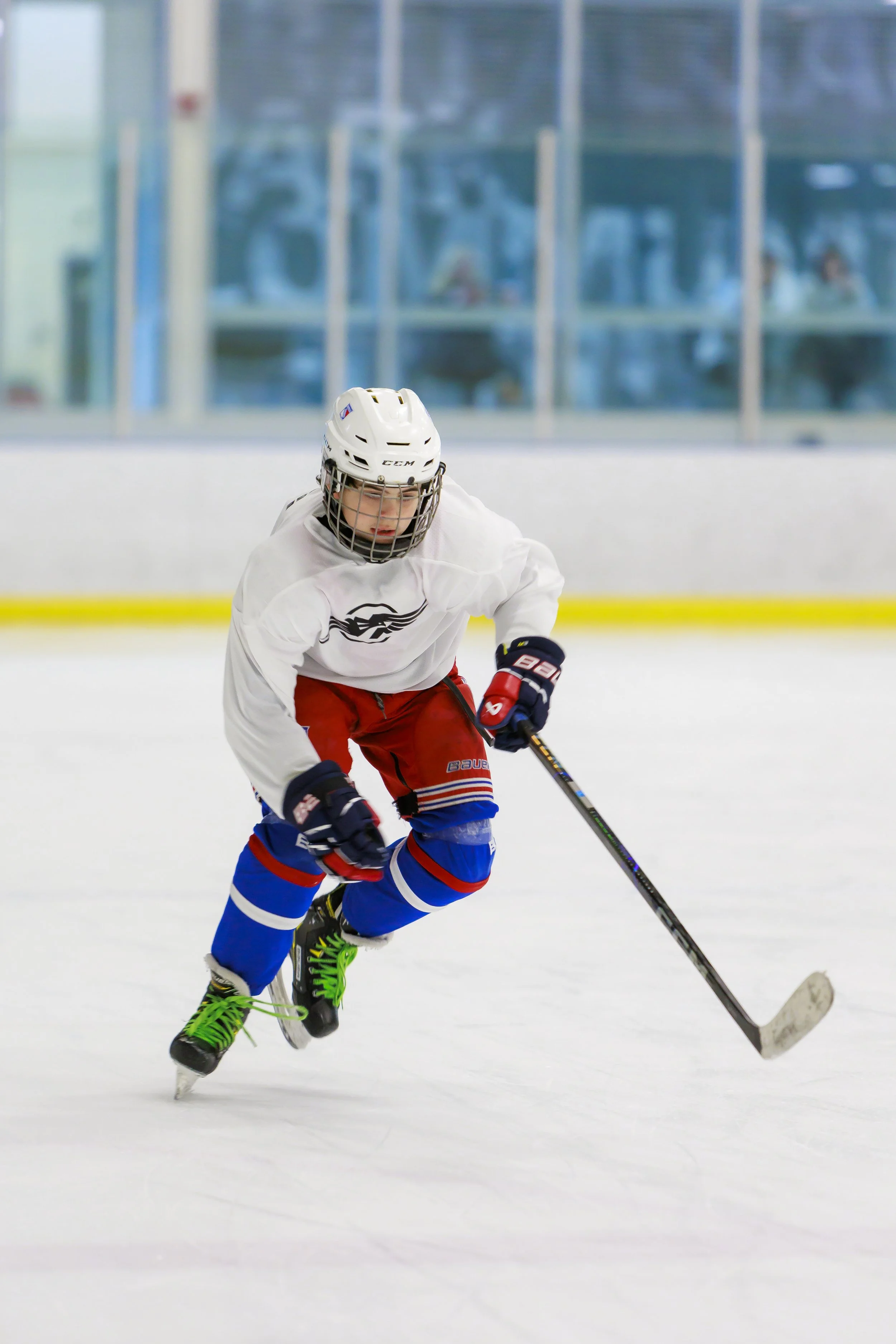
Performance Tip of the Month: The Skill That Separates Players in Small Spaces
Straight-line speed gets noticed in warm-ups. Tight turns get noticed in games.
At camp and in exhibition play, most puck battles and defensive reads happen in small areas, not open ice. The players who can change direction without losing speed or control are the ones who consistently come out ahead — everyone else is still recovering their edge.
Why Tight Turns Matter
Puck battles happen in tight spaces, not straight lines
Defenders who can't turn tight get beaten wide
Forwards who can't turn tight get pushed off their route
Camp evaluators watch small-area movement closely, because it's harder to fake than a straight sprint
What Most Players Get Wrong
Slowing down too early, before the turn even starts
Standing too upright through the turn instead of staying low
Turning only on one edge instead of using both inside and outside edges
Losing their head and stick position while focused only on their feet
What a Strong Tight Turn Looks Like
Enter Low — Deep knee bend before the turn begins, not during it.
Lean Into the Turn — Weight shifts into the new direction early, using the edge instead of fighting it.
Keep Feet Under the Body — Tight turns break down when players reach or lean their upper body ahead of their feet.
Explode Out — The turn isn't the finish line. Players who accelerate immediately out of the turn are the ones who actually gain separation.
How to Train It
Tight turns are a control skill before they're a speed skill. Train them slow first — full control through the turn, both directions, both edges — before adding speed. Once the mechanics hold up at speed, add a puck, then add pressure from another skater. Control first, then speed, then chaos.
How It Translates at Camp
A player who can turn tight and explode out of it wins races that look identical to everyone watching, right up until the turn. That's the moment coaches remember.
Final Thought
Speed in a straight line is common. Speed that survives a direction change is rare — and it's exactly what separates players when the ice gets small.

Recipe of the Month: Sunrise Power Plate (Fuel for Early Ice)
With HER Edges kicking off at 9:00 AM daily, and training camps often scheduling early ice, what you eat before an early session matters as much as the session itself. This month's recipe is quick, easy on the stomach, and built to fuel an early skate without weighing you down.
Why This Meal Works
Easily digestible carbohydrates for quick, usable energy
Moderate protein to support muscle without slowing digestion
Low fat and fibre so it sits well before hard skating
Best eaten 60–90 minutes before stepping on the ice
Ingredients (Serves 1–2)
Base:
1 cup rolled oats
1 cup milk or milk alternative
Protein & Toppings:
1 scoop protein powder or 2 tbsp Greek yogurt
1 banana, sliced
1 tbsp honey or maple syrup
Pinch of cinnamon
Hydration Side:
1 glass water with a pinch of salt, or a low-sugar electrolyte drink
Instructions
Cook the oats with milk over medium heat, stirring until creamy, about 5 minutes.
Stir in protein powder or top with Greek yogurt once oats are off the heat.
Top with sliced banana, honey, and a pinch of cinnamon.
Pair with water or an electrolyte drink and eat 60–90 minutes before hitting the ice.
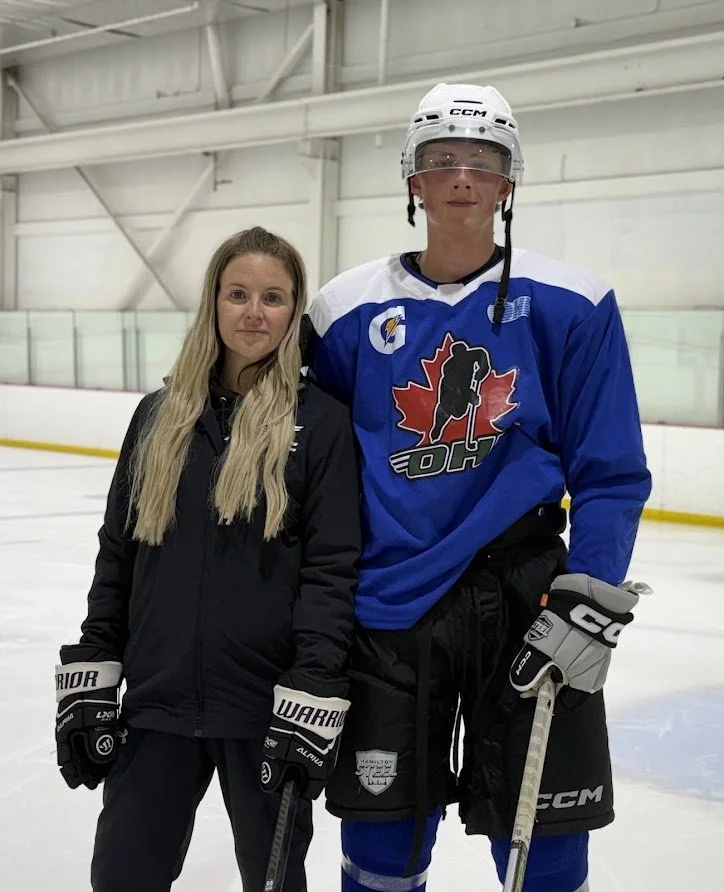
Atheletes of the Month: Liam McNamara — U16 AAA, Hamilton Steel
This month, Falcon's Edge is proud to recognize Liam McNamara as our Athlete of the Month. Liam is a 2011-born, 6'3" defenseman with the U16 AAA Hamilton Steel.
Liam has been training with Falcon's Edge on acceleration, tight turns, and agility — the specific tools that let a big-bodied defenseman close gaps and change direction without losing his edge. For a player his size, that combination is what separates a good skater from a dominant one.
Liam is preparing for the 2027 OHL Draft, and the focus in his sessions reflects that: building the first-step quickness and lateral mobility that scouts look for in a modern, mobile defenseman.
It's been a strong month of consistent, focused work, and we're excited to keep building with him heading into training camp and the exhibition season.
Great work, Liam — keep building your edge.
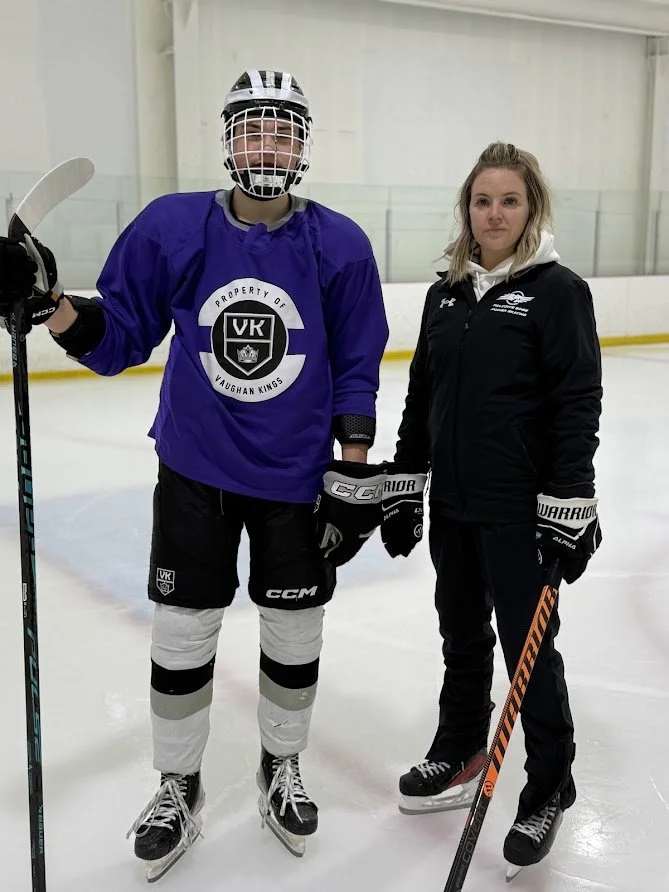
Congratulations to Liam Nelson
Falcon’s Edge is proud to congratulate Liam Nelson on being selected by the Oshawa Generals in the ninth round of the OHL Priority Selection.
A 2010-born defenceman standing 5'11" and weighing 185 pounds, Liam joins the Generals after graduating from the Vaughan Kings U16 AAA program. He is a strong, physical defender who brings a dependable presence to the back end and uses a long, powerful stride to cover the ice effectively.
Liam is a high-upside player whose development reflects his commitment to refining the details that matter most. Over the past several months, he has trained weekly with Falcon’s Edge, focusing on:
Stride efficiency and acceleration: Improving his first-step explosiveness to close gaps faster and win puck races.
Elite edge control and mobility: Enhancing lateral movement, transitions and pivoting to defend effectively against speed.
Balance and stability: Building a stronger skating base to win battles and maintain control under pressure.
Defensive footwork and gap control: Translating improved skating mechanics into stronger positioning and earlier defensive engagement.
At the Major Junior level, the difference between good and great players is often determined by skating efficiency—not simply skill. Liam’s selection is a testament to his work ethic, coachability and commitment to continuous improvement.
Congratulations, Liam. Everyone at Falcon’s Edge is proud of what you have accomplished, and we look forward to watching you take the next step in your hockey journey with the Oshawa Generals.
Great work, Liam — keep building your edge.
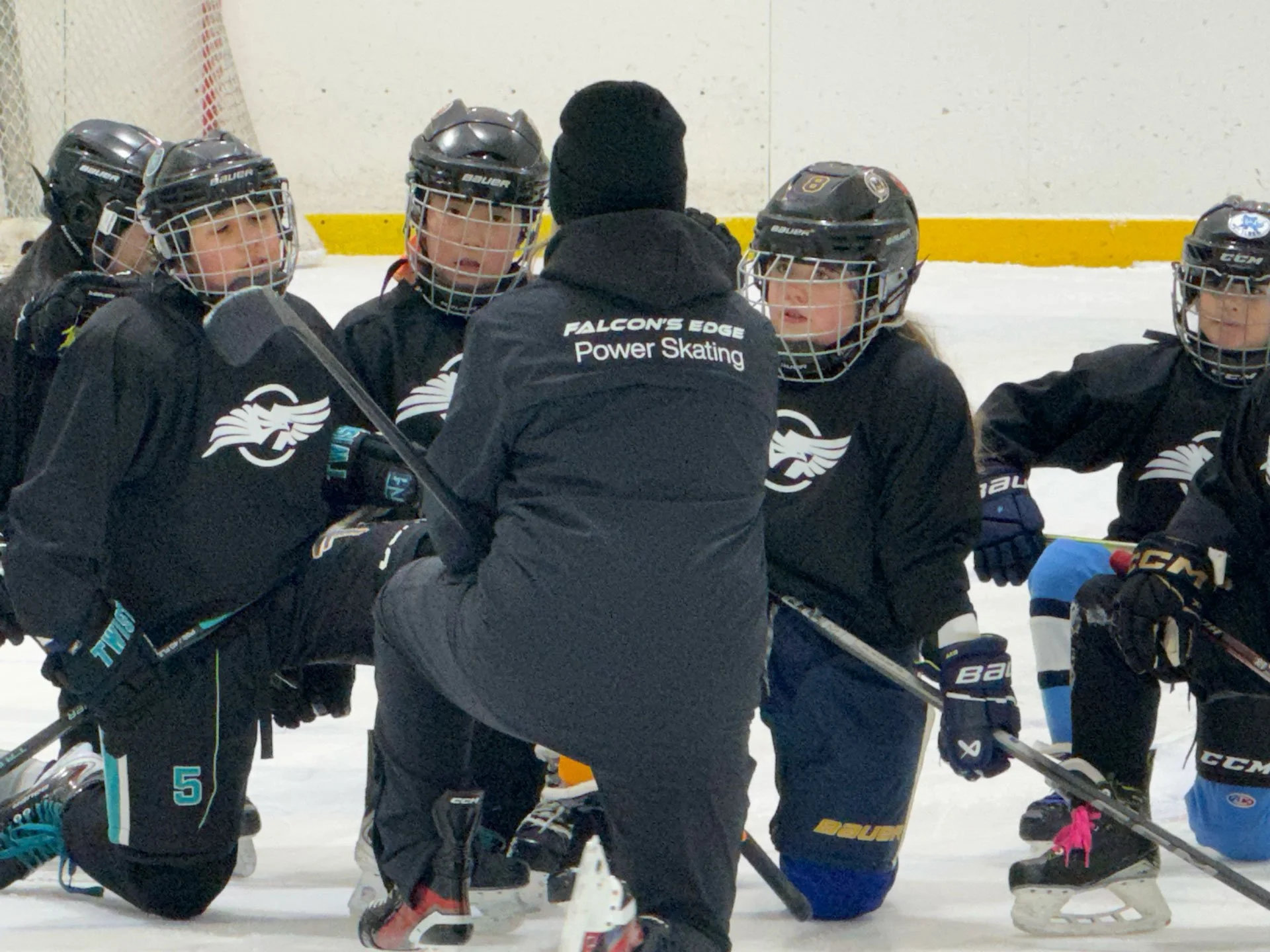
HER EDGES — Girls Power Skating Camp
Five days of focused, girls-only power skating training for Rep-level players heading into training camp and the exhibition season.
● August 24–28, Monday through Friday
● 9:00 AM, one-hour ice session daily
● Location: Oakville Hockey Academy
● Girls only, Rep-level players
● $372.90 (taxes included)
● Maximum 12 skaters — first come, first served
Spots are confirmed only once payment is received and the Falcon's Edge waiver is completed. No refunds or credits will be issued.
Spots are limited and expected to fill quickly.